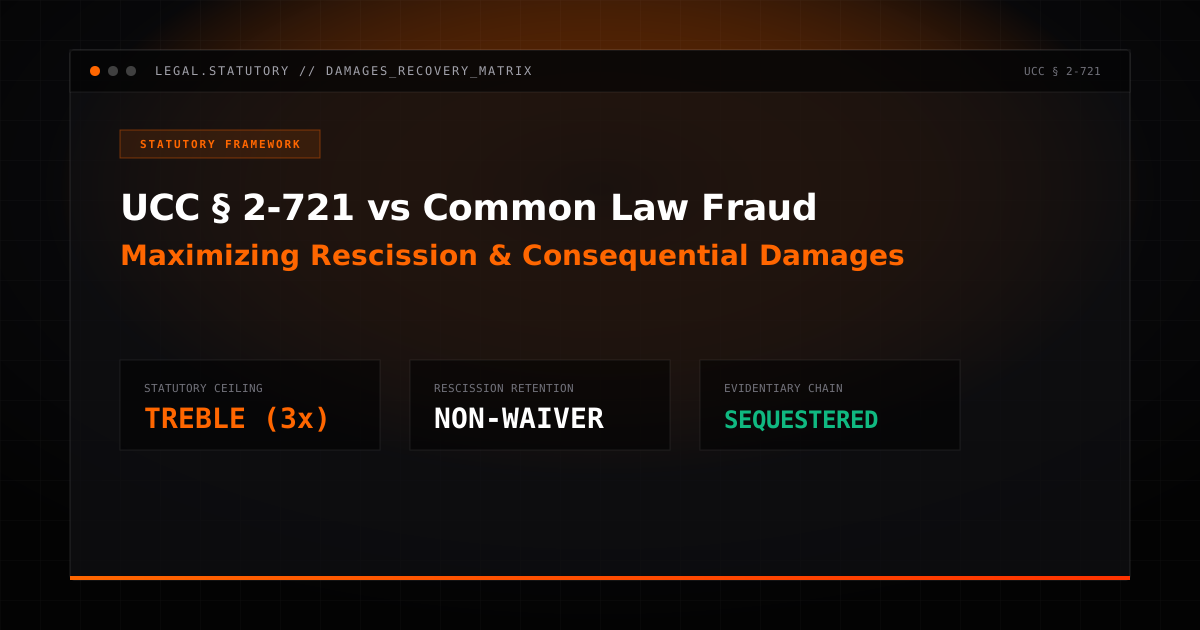
The Strategic Intersect of Uniform Commercial Code & Common Law Fraud
When an enterprise discovers that a high-value sales contract was executed on fraudulent terms—whether through forged pricing schedules, silent redlines, or misrepresented vendor security certifications—general counsel faces an immediate strategic crossroads: proceed under common law fraudulent misrepresentation, or invoke the codified statutory remedies of the Uniform Commercial Code (UCC) § 2-721.
Codified Statutory Power: UCC § 2-721
Section 2-721 of the Uniform Commercial Code radically modernizes contract dispute jurisprudence by eliminating the harsh common law doctrine of “election of remedies”:
“Remedies for material misrepresentation or fraud include all remedies available under this Article for non-fraudulent breach. Neither rescission or a claim for rescission of the contract for sale nor rejection or return of the goods shall bar or be deemed inconsistent with a claim for damages or other remedy.” — UCC § 2-721
Under historic common law doctrines, an aggrieved party who elected to rescind a fraudulent contract was often deemed to have voided the agreement ab initio, thereby relinquishing the right to sue for expectancy or consequential contract damages. UCC § 2-721 explicitly abolishes this forfeiture: corporate counsel may rescind the toxic contract, demand immediate restitution, and simultaneously seek full consequential breach damages.
Comparative Analysis Matrix
| Legal Dimension | Common Law Fraud | UCC § 2-721 Statutory Action |
|---|---|---|
| Scienter / Intent Requirement | Requires proof of intentional deceit (scienter) | Applies to innocent or negligent material misrepresentation |
| Election of Remedies | Strict election often enforced; damages or rescission | Cumulative remedies: Rescission + Consequential Damages |
| Burden of Proof | Clear and convincing evidence (higher threshold) | Preponderance of the evidence |
| Downstream Liability Calculation | Difficult to quantify remote consequential damages | Quantifiable via Contract Leakage Multiplier |
Treble Damages and the Federal False Claims Act (31 U.S.C. § 3729)
Where enterprise sales contracts involve government procurement, public utilities, or federal grant subcontracts, fraudulent contract modifications cross into federal statutory exposure. Under the False Claims Act (31 U.S.C. § 3729), any entity knowingly presenting or causing to be presented false claims or tampered execution records faces mandatory treble damages plus statutory per-claim penalties exceeding $27,000 per violation.
Furthermore, under Sarbanes-Oxley §§ 404 & 802, corporate officers face direct criminal culpability for knowingly altering, destroying, or falsifying corporate audit logs or contract execution instruments in contemplation of legal proceedings.
Actionable Steps for Legal Counsel
- Calculate Exposure Baseline: Immediately calculate your maximum exposure using the Contract Breach Scaler Engine to determine whether the threshold for SEC Form 8-K material disclosure has been breached.
- Issue Dual Pleadings: Structure formal demand letters and draft complaints pleading UCC § 2-721 breach concurrently with common law fraud in the alternative.
- Cross-Reference Execution Hashes: Verify whether the contract execution involved proxy spoofing or forged audit certificates pursuant to our Digital Signature Forensic Protocol.